Problem: A crew showed up at your door after a storm
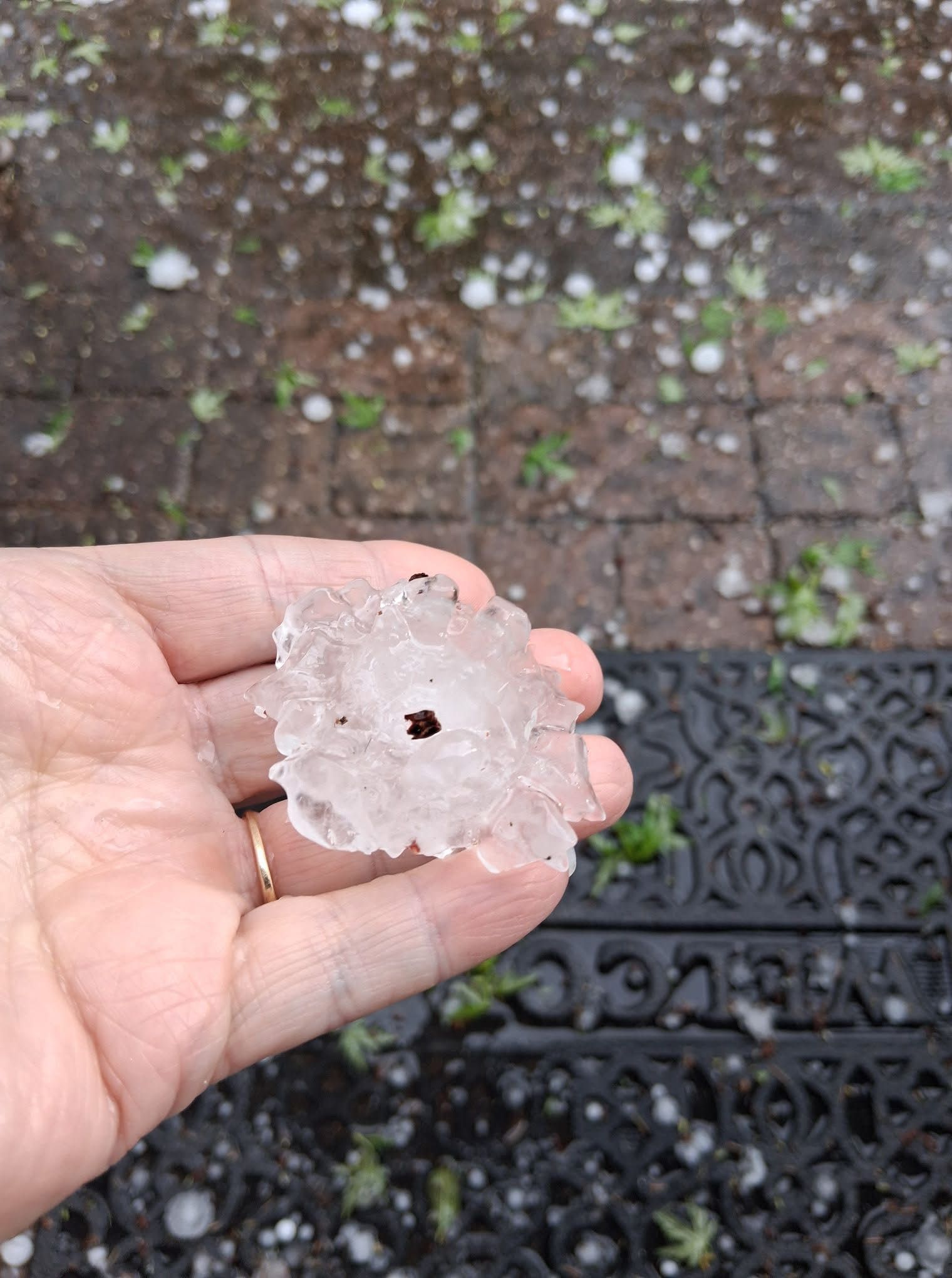
A storm passes through New Point and within a day or two someone is on your porch, saying they noticed damage to your roof and can take care of it right away if you sign today.
Here is how we solve it. We tell you to slow down, because that knock is itself a warning sign. Established local contractors rarely canvass door to door, since their reputation brings steady work. The crews that do are usually following storms across the country, working on commission, and gone once the neighborhood is saturated. There is nothing wrong with thanking them politely and closing the door. Then verify on your own terms: search for local companies with real reviews and a physical address, and get a documented inspection from one you can find again. If the door knocker is legitimate, they will still be there after you have done your homework. If pressure to sign now is the only thing holding the deal together, that tells you what you need to know. Our free inspection gives you an independent read so you are never relying on whoever showed up uninvited.
Problem: You cannot tell which estimate is real
Three bids come back at three very different numbers, and a New Point homeowner has no way to know whether the high one is padded or the low one is cutting corners.
Here is how we solve it. The fix is to compare on scope, not on the bottom line, which only works when each estimate is written with line items. A real quote names the shingle brand and model, the underlayment, the ice and water shield coverage, the flashing approach, the decking allowance, who pulls the permit, the cleanup, and the warranty terms. Once all three are itemized, the differences usually explain themselves: one includes new flashing and proper ice and water shield while another quietly reuses old flashing and skips coverage in the valleys. Insist on that detail from everyone, and a bid that refuses to provide it removes itself from the running. A documented New Point Roofing estimate is built to be held up against the others line by line, which is exactly how an honest comparison should work.
Problem: You are not sure how to verify their credentials
A New Point homeowner wants to check a contractor out but does not know where to look or what counts.
Here is how we solve it. We point you to the sources that settle it quickly, because nearly every important claim is verifiable in under an hour. For insurance, request the certificate from the carrier directly and call to confirm it is current, paying attention to workers compensation, which protects you from liability if a worker is injured on your property. For the business itself, search your state's business registry through the Secretary of State office to confirm it is registered and current. For manufacturer certifications, use the manufacturer's own contractor directory, since a cert that does not appear there is not real. For reputation, check the BBB and cross-reference reviews across Google, Facebook, and Nextdoor for patterns over time. New Point Roofing welcomes every bit of that scrutiny, and an honest New Point contractor will make verification easy rather than awkward.
Problem: A contractor wants a big deposit up front
A roofer asks for half the project cost before any work begins, or wants payment in full before materials arrive, and the New Point homeowner is not sure whether that is normal.
Here is how we solve it. We explain what a healthy payment structure looks like so the outlier stands out. A reasonable deposit is modest, commonly in the range of ten to twenty-five percent to cover materials, with the balance due after the final walkthrough once you have approved the work. A demand for fifty percent or more up front, full payment before materials show up, or cash only points to a contractor without established supplier credit, which is a sign of financial instability or worse. New Point Roofing works on a material deposit at signing with the balance after completion, because a stable company with real supplier relationships does not need to finance the job out of your pocket. If the payment terms feel off, trust that instinct and ask why the deposit is so large.
Problem: One quote is far cheaper than the others
A New Point homeowner gets a bid that comes in dramatically below the rest and is tempted, understandably, by the savings.
Here is how we solve it. We help you find out what the cheap quote left out, because a price that low almost always means missing scope rather than a better deal. The corners that get cut to hit a rock-bottom number are the ones you cannot see from the ground: proper underlayment swapped for the cheapest felt, ice and water shield skipped in the valleys, old flashing reused instead of replaced, and a thin decking allowance that turns into a change order the moment soft wood turns up. When you compare the lowball against an itemized quote, the gaps appear, and the savings tend to disappear once the change orders start. The honest move is to make every bid spell out the same scope, then compare. A New Point Roofing estimate names what it includes precisely so a low number cannot hide what it leaves out.
Problem: A contractor offered to cover your deductible
A roofer pitches the job as effectively free by promising to cover or waive your insurance deductible, and it sounds like a generous deal.
Here is how we solve it. We tell you plainly that this is illegal in New Point and a clear reason to walk away. A contractor offering it is proposing insurance fraud, and the way it actually works is that they inflate the estimate submitted to your insurer by the deductible amount, which defrauds the insurance company and can expose you to liability too. The offer comes in many wordings, from eating your deductible as a courtesy to running a special that covers it, and all of them are the same problem. A legitimate New Point contractor charges the deductible because the law requires it and handles the claim honestly. New Point Roofing is local and licensed under License {license}, and we will never make this offer, because the company that breaks this rule is showing you exactly how it treats every other rule.
Problem: You only have one quote and nothing to compare it to
A New Point homeowner gets a single estimate, has no baseline for whether the number or the scope is reasonable, and feels stuck deciding in the dark.
Here is how we solve it. We encourage you to gather at least two more itemized bids, because a roof decision made on one quote is a decision made without context. With three line-item estimates in hand, the picture comes into focus quickly: you can see which scope is complete, which materials match, and which number is fair for the work. A lone quote tells you nothing about whether it is padded or thin, while three reveal the outliers in both directions. This is also why we put our own estimate in writing with full line items, so it stands up to exactly that comparison rather than asking you to trust it on its own. If a contractor discourages you from getting other bids, treat that as a reason to get them, since the push to skip comparison usually means the number would not survive it.